IN BRIEF
Shockwave therapy may be discussed alongside exercise for selected persistent tendon conditions. It does not automatically replace an individualized exercise programme. Ask why it is appropriate for your diagnosis, what uncertainty and risks apply, how progress will be reviewed, and what you will continue between appointments.

In this guide
- Start with the condition, not the machine
- What the evidence can and cannot tell you
- Find out whether you have tried a meaningful exercise plan
- Discuss shockwave as a specific decision
- Review risks and medicines before the first session
- Keep exercise and aftercare in the same plan
- Measure change in a way that matters to you
- Compare the whole course and arrange continuity
- A relevant listed clinic to consider
Start with the condition, not the machine
Shockwave therapy and exercise-based rehabilitation are not necessarily competing choices. Extracorporeal shockwave therapy, usually shortened to ESWT, applies acoustic energy through the skin. Exercise-based rehabilitation asks you to practise movements and progressively build the capacity required for daily life. A clinician may discuss using them together for a particular tendon problem, but a clinic offering both has not yet established that you need both.
Before comparing packages in Korea, ask the examining clinician to name the condition, identify the affected structure and explain the findings behind that assessment. Pain at the back of the heel and pain under the heel are not interchangeable diagnoses. Even within Achilles tendon problems, the location matters. AAOS distinguishes symptoms at the tendon attachment from those in the middle portion; exercise advice can differ. Copying another patient's programme can therefore answer the wrong question.
Explain what you need to regain: the walk from the station to work, standing through a shift, stairs at home or running. Ask which part of the proposed treatment addresses that task. This gives the consultation a practical focus before anyone discusses the brand of equipment or number of appointments.
Sources: AAOS: Achilles tendinitis · George Eliot Hospital: ESWT
What the evidence can and cannot tell you
For Achilles tendinopathy, NICE reports that the evidence for ESWT effectiveness is inconsistent and limited, while identifying no major safety concerns in the evidence it considered. Its guidance calls for particular attention to consent, monitoring and review. This is UK guidance about that condition, not a Korean regulatory requirement or a statement that every use of shockwave therapy has identical evidence.
AAOS describes exercise and other nonsurgical measures as important options for Achilles symptoms and notes that more evidence is needed before strong recommendations for routine ESWT use. Some patients improve with combinations of treatment. That does not let a clinician promise that the same combination will work for you, or establish which part caused an improvement.
Ask what evidence applies to your diagnosis, how similar the studied patients were to you and what uncertainty remains. A claim about a different tendon, a different device or a different treatment schedule may not answer your question. It is reasonable to request the name of a patient information source and time to read it. Evidence uncertainty should be part of the decision, not something discovered after paying for treatment.
Sources: NICE: ESWT for Achilles tendinopathy · AAOS: Achilles tendinitis
Find out whether you have tried a meaningful exercise plan
Saying that physiotherapy did not help can describe very different experiences. You may have received mainly passive treatments, been handed exercises without a demonstration, stopped because the programme was too painful, or completed a supervised plan that still failed to improve function. Tell the clinician which happened. Bring the actual exercises, dates, frequency and any restrictions you were given if you have them.
The 2024 clinical practice guideline for midportion Achilles tendinopathy supports tendon-loading exercise as a first-line option for appropriately selected patients. That recommendation is specific to the condition and includes qualifications about tendon structure. It is not a general instruction for everyone with heel pain to perform demanding exercises.
Ask the therapist to watch your technique and explain how the starting level was chosen. Agree how you will report symptoms and how the programme will change if it is too difficult or too easy. A useful plan also accounts for what you can realistically do between appointments. You may need an alternative to equipment that will not be available in your hotel or home. The aim is a programme that can be reviewed and adjusted, rather than a list you feel obliged to complete regardless of response.
Sources: 2024 Midportion Achilles clinical practice guideline
Discuss shockwave as a specific decision
Ask why ESWT is being proposed now. Is the diagnosis sufficiently clear? Which previous treatments have been tried, and what would be a reasonable alternative if you decline? These questions should lead to a clinical explanation, not just a description of the machine.
Different services use different eligibility criteria. George Eliot Hospital, for example, describes considering ESWT after a period of supervised exercise rehabilitation. That is one NHS service's pathway, not a universal waiting period to apply in Seoul. It illustrates why the clinic should explain its own decision process and the evidence behind it.
Ask whether the planned treatment is focused or radial, who will deliver it, what the appointment involves and how discomfort will be managed. Request an explanation of how the chosen technique relates to your condition. A device name alone does not establish effectiveness. You should also know what will happen if you cannot tolerate treatment or decide to stop. Consent is a conversation about a proposed treatment, including its uncertainties; it is not simply a signature on a package form.
Sources: George Eliot Hospital: ESWT
Review risks and medicines before the first session
Shockwave therapy is delivered from outside the body, but non-invasive does not mean risk-free. Royal National Orthopaedic Hospital information describes discomfort, bruising, redness, swelling and altered sensation among possible effects. It also identifies a small risk of tendon or plantar fascia rupture and injury to nearby soft tissue. Ask the treating clinician which risks are relevant to your proposed treatment and how to contact the team afterward.
Give the clinic your medication list and disclose relevant medical conditions, previous injections and operations. Kent Community Health's patient information identifies multiple circumstances requiring screening, including bleeding risks and medicines, pregnancy, recent steroid injections and local infection. Eligibility policies vary; do not use a general article to decide for yourself whether treatment is safe.
Some aftercare leaflets advise changing the use of anti-inflammatory medicines around ESWT. Do not stop prescribed medication on your own. Ask the treating clinician and prescribing professional to reconcile any conflicting instructions before the appointment. A translated medication list should include the generic name where possible, so an unfamiliar brand does not obscure an important detail.
Sources: Royal National Orthopaedic Hospital: ESWT · Kent Community Health: ESWT

Keep exercise and aftercare in the same plan
Ask exactly what to do between shockwave appointments. Oxford University Hospitals advises continuing prescribed exercises while temporarily avoiding strenuous impact after treatment. Other NHS services also describe short restrictions on demanding activity. These are service instructions, not permission to resume your own sport on a fixed date. Your clinician should adapt the advice to the treated area, your response and the rest of your rehabilitation.
Request written instructions separating ordinary activity, prescribed exercises and activities to avoid. Ask how the next session should change if pain increases or function drops. If you receive different advice from the practitioner operating the device and the therapist supervising exercise, ask them to agree one plan before you leave.
A day of lower pain can be encouraging, but it does not by itself answer whether you can manage repeated stairs, a long workday or training. Do not add a demanding sightseeing day to test the treatment. For a sudden severe change or loss of function, seek prompt local assessment; Royal National Orthopaedic Hospital specifically advises emergency assessment for sudden pain or loss of function after ESWT. Routine follow-up should not delay urgent care.
Sources: Oxford University Hospitals: Shockwave therapy · Royal National Orthopaedic Hospital: ESWT
Measure change in a way that matters to you
Before beginning a treatment course, agree what improvement would count. Ask the team to record a starting point for the activity that matters most, alongside its clinical measures. For example, you could describe the walking route you currently manage and what stops you. This is a discussion aid, not a recommendation to push through symptoms or self-administer a performance test.
Agree when the decision will be reviewed and who is responsible. Ask how the clinician will distinguish a temporary symptom change from sustained improvement in function. Also ask what happens if there is no meaningful change: reassessment, an altered rehabilitation plan, another opinion or discussion of other options may be more useful than automatically purchasing more sessions.
Keep a short record that you can actually maintain. Note the prescribed activity, any change you were told to monitor and questions for the next visit. Avoid changing several parts of the programme independently between appointments, because the clinician then has less reliable information about your response. The purpose of recording progress is to improve the conversation, not to turn recovery into a daily score you must beat.
Sources: NICE: ESWT for Achilles tendinopathy
Compare the whole course and arrange continuity
Request an itemized estimate that distinguishes assessment, investigations if indicated, shockwave sessions, supervised exercise appointments and review. Ask whether the estimate can change after examination. A low per-session procedure price may tell you little about the total cost of a plan that also needs regular clinical review. No standard Korean price or guaranteed number of visits is assumed here.
If you are visiting Korea, explain your departure date at the first consultation. Ask whether the proposed schedule makes clinical sense within that period and what will continue afterward. You do not need to compress a longer rehabilitation process into a holiday simply because a procedure can be performed quickly. Residents should also consider whether the trip from home or work makes repeat appointments feasible.
Ask for a summary identifying the working diagnosis, treatment delivered, response, current exercises and precautions, and the next review. Confirm what communication support is available for your appointment and written instructions. If you will see another clinician after leaving Korea, arrange to share the summary with your consent. Do not assume that buying a package includes remote follow-up or cross-border care.
A relevant listed clinic to consider
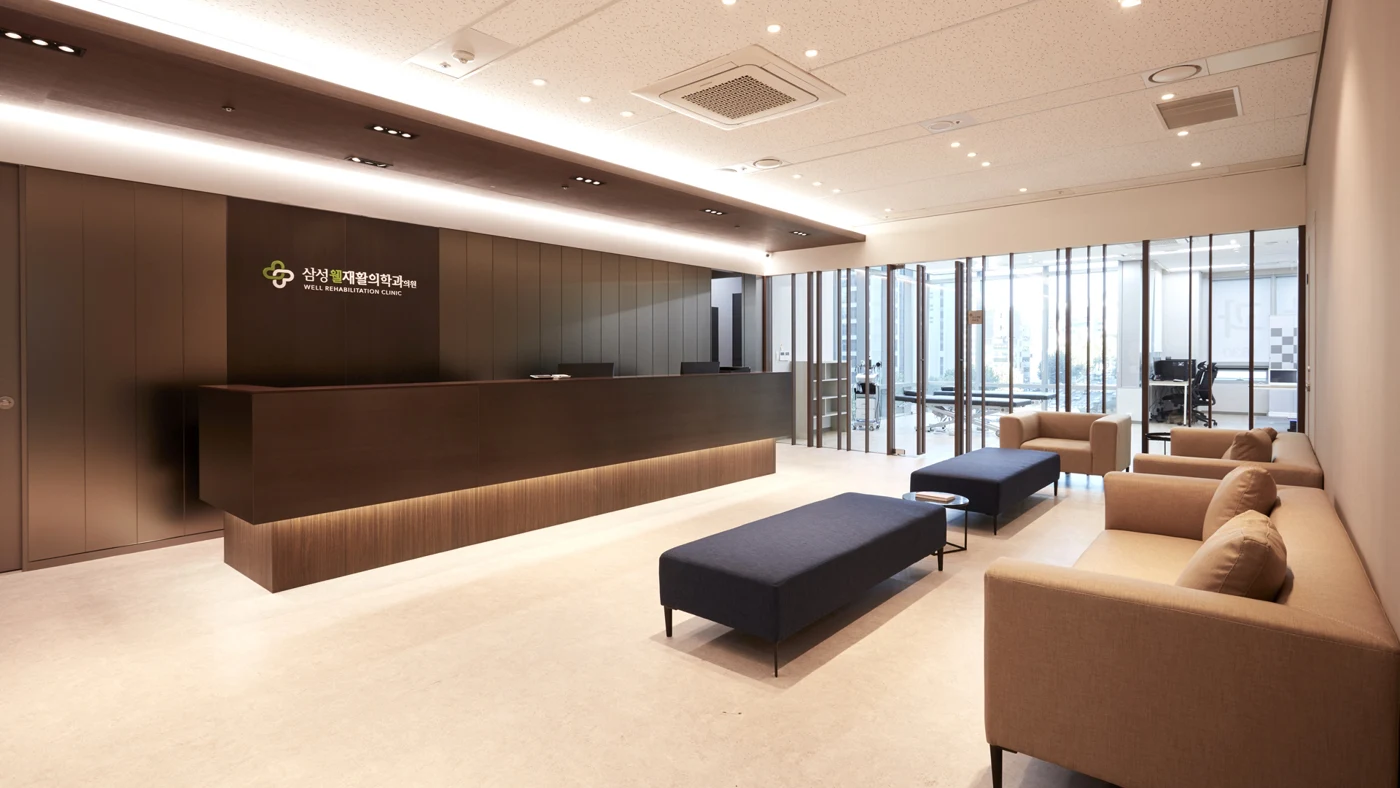
Well Rehabilitation Clinic is a relevant option to investigate because its official international website describes both musculoskeletal rehabilitation with therapeutic exercise and extracorporeal shockwave therapy. It lists focused and radial shockwave systems and identifies Dr. Kim DaeHwan as its rehabilitation medicine physician and director. His official biography lists musculoskeletal pain management and postoperative rehabilitation among his specialties. These are clinic-published facts, not independent verification of outcomes or a promise that he will personally deliver every part of your treatment.
Review the clinic's international website at https://www.wellrehabkorea.com/ and Dr. Kim's biography at https://www.wellrehabkorea.com/doctors/dae-hwan-kim before requesting an assessment. Ask how the team would decide between exercise alone, an adjusted programme and adding ESWT for your diagnosis. Request the name of the clinician responsible for reviewing progress and clarify appointment language and charges directly.
Well is listed on Rehab Korea and holds a PB commercial plan, which gives it placement priority when relevant. The recommendation is based on the match between its published services and this article's question. Commercial priority is not evidence of superior treatment or suitability. You can take the same questions to another appropriately qualified service and compare the clarity of the answers.
Sources: Well: official international website · Well: Dr. Kim DaeHwan
Continue reading
Explore relevant providers
Selected for the published services relevant to this guide. Commercial partners receive priority among relevant providers; placement is not a clinical ranking. Review the service and ask about suitability before committing to treatment.
Questions before you choose care
Can shockwave therapy replace my exercises?
Do not assume it can. Ask how each part of the plan addresses your diagnosis and function. NHS aftercare information commonly includes continued prescribed exercise, with activity adjusted around treatment. Your own clinician should explain any changes.
Does shockwave therapy work for every tendon problem?
No treatment result is guaranteed, and evidence varies by condition. NICE identifies uncertainty for Achilles tendinopathy. Ask for evidence relevant to your diagnosis and the proposed technique, rather than relying on a general success claim.
Should I book a course before an assessment in Korea?
An initial enquiry can clarify services and costs, but the clinical plan may change after examination. Ask about assessment-first booking, alternatives, cancellation terms and review before committing to repeated treatment.
References
- NICE: ESWT for Achilles tendinopathy
- AAOS: Achilles tendinitis
- 2024 Midportion Achilles clinical practice guideline
- George Eliot Hospital: ESWT
- Royal National Orthopaedic Hospital: ESWT
- Kent Community Health: ESWT
- Oxford University Hospitals: Shockwave therapy
- Well: official international website
- Well: Dr. Kim DaeHwan
Editorial research: 2026-11-02. Educational information; not independently medically reviewed.